
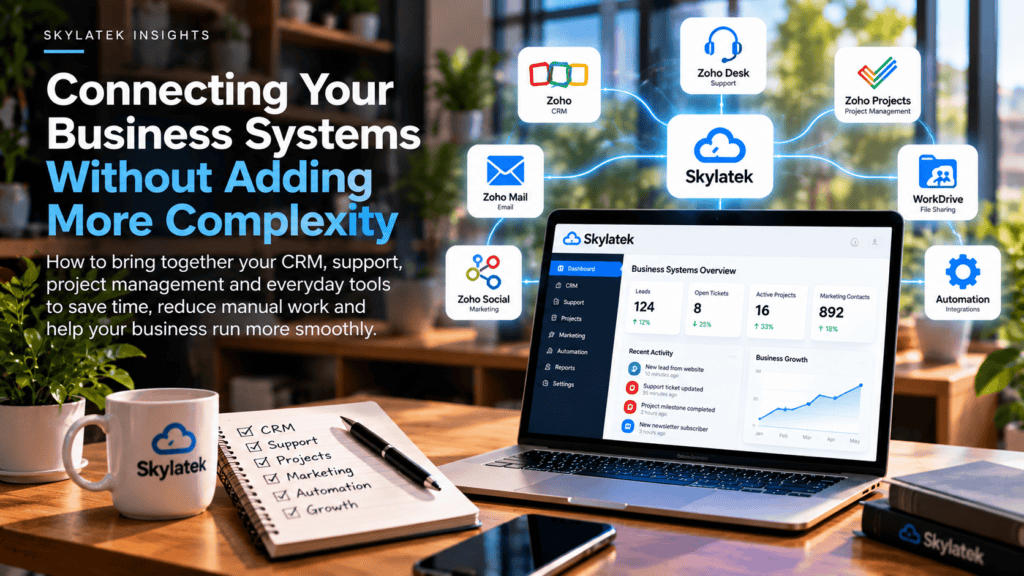
As a business grows, customer details can end up in email, spreadsheets, forms, calendars and several separate applications. The problem is not necessarily a lack of software. It is that information does not move smoothly between the tools already in use.
Map the work before choosing tools
Start with a real customer journey. How does an enquiry arrive? Who responds? Where is the follow-up recorded? What happens after the customer agrees to proceed? Write down the hand-offs and repeated tasks before deciding what to automate.
Decide where information belongs
For example, a customer relationship management system can hold sales conversations, a help desk can manage support requests and a project tool can track delivery. The goal is not to copy everything everywhere. It is to make the right information available to the right people at the right time.
Automate small, reliable steps first
Useful starting points might include creating a follow-up task when an enquiry arrives, alerting the team to a new support request or sending a confirmation when a booking is made. Each automation should have a clear owner and a way to notice when it fails.
Keep people in control
Automation should reduce repetitive administration, not obscure responsibility. Make it easy to correct records, review unusual cases and understand why a notification or task was created.
Measure whether the system helps
Look for fewer missed enquiries, faster hand-offs and less duplicate data entry. A connected business system is successful when daily work becomes clearer and easier—not simply because more apps have been integrated.
Skylatek works with businesses exploring connected systems, including Zoho-based workflows. Discover Business Systems or talk through your current process.